Nearly 4.5 million dog bites occur annually in the United States, with a significant portion requiring medical attention. When a dog is bitten by another dog, immediate care is vital to prevent infection and promote healing.
Dog bites can lead to serious infections, including Capnocytophaga and Pasteurella. Prompt veterinary treatment is essential. Proper wound care and, if necessary, antibiotics can significantly reduce the risk of complications.
Key Takeaways
- Immediate care is vital for treating dog bites effectively.
- Veterinary attention is necessary to assess the wound and provide appropriate treatment.
- Proper wound care can prevent infection and promote healing.
- Antibiotics may be prescribed to reduce the risk of infection.
- Monitoring for signs of infection is critical in the days following a dog bite.
Understanding Dog Bite Severity
Dog bites can vary significantly in severity, and understanding the extent of the injury is vital for dog bite wound care. The impact of a dog bite depends on several factors. These include the size and health of the dog, the location of the bite, and the depth of the wound.
Different Types of Dog Bites and Their Characteristics
Dog bites can be categorized into different types based on their severity and characteristics. These include puncture wounds, lacerations, and crush injuries. Puncture wounds are typically caused by the dog’s canine teeth and can be deep but may not bleed much. Lacerations, on the other hand, are tears in the skin that can cause significant bleeding.
Assessing the Wound Depth and Location
Assessing the depth and location of the wound is critical for determining the severity of the dog bite. Deep wounds that penetrate through the skin and into underlying tissues can be serious. They may require immediate veterinary attention.
Risk Factors for Serious Injuries
Certain factors can increase the risk of serious injuries from dog bites. These include the dog’s size and strength, the presence of underlying health conditions in the injured dog, and the location of the bite. Bites to the head, neck, and thorax are considered high-risk due to the possibility of serious internal injuries.
| Risk Factor | Description | Severity Level |
|---|---|---|
| Dog’s Size and Strength | Larger dogs can inflict more severe injuries | High |
| Location of the Bite | Bites to the head, neck, and thorax are more serious | High |
| Underlying Health Conditions | Presence of health issues can complicate healing | Moderate to High |
Understanding these factors is essential for providing appropriate first aid for dog bite. It ensures the injured dog receives the necessary care.
Immediate Response to a Dog Bite
Upon a dog bite, it’s vital to act quickly and remain calm. This initial response is key to reducing injury and infection risk. It also influences the subsequent care and treatment of the injured dog.
Safely Separating the Dogs
The primary step is to safely separate the dogs involved to prevent further harm. This must be done with caution to avoid getting bitten yourself. Utilize barriers or distractions like treats or toys to keep the dogs apart.
Restraining and Calming Your Injured Dog
After separating the dogs, it’s critical to restrain and calm the injured dog. If needed, use a muzzle and speak softly to soothe the dog. Gentle restraint can help prevent additional injuries.
Performing a Quick Assessment of Bite Severity
Assessing the bite’s severity quickly is essential. Inspect the wound for signs of damage, such as bleeding or swelling.
Checking for Blood Loss
Check for blood loss by gently examining the wound. Apply gentle pressure with a clean cloth to stop any bleeding.
Evaluating Pain Response
Evaluate the dog’s pain response by observing their reaction to touch or movement. A severe reaction could indicate a more serious injury.
By adhering to these immediate response steps, you can ensure the injured dog receives the necessary care. This helps minimize the risk of complications.
What to Put on a Dog Bite from Another Dog
Understanding the right cleaning solutions and antiseptics is the first step in treating a dog bite. Proper wound care is essential to prevent infection and aid in healing.
Safe Cleaning Solutions for Wounds
When dealing with dog bite wounds, it’s vital to use gentle and safe cleaning solutions. Mild soap and warm water are often recommended for the initial cleaning. This method helps remove dirt and bacteria effectively.
Hydrogen peroxide can be used, but with caution. It can damage tissue if used in high concentrations or too often.
Appropriate Antiseptics and Their Application
After cleaning, applying an antiseptic can significantly reduce infection risk. Common antiseptics include chlorhexidine and povidone-iodine. It’s important to follow the product’s instructions and use them in diluted forms if advised.
Products and Substances to Avoid
Not all household items are safe for wound care. Some can actually cause more harm than good.
Common Household Items That Can Harm Wounds
- Butter or other greasy substances, which can trap bacteria
- Human medications like Neosporin, unless vet-approved
- Harsh chemicals or detergents, which can irritate the wound
Human Medications That Are Dangerous for Dogs
Certain human medications are toxic to dogs. For instance, acetaminophen and ibuprofen are dangerous if ingested. Always keep these out of reach and consult a vet before administering any medication.
| Substance | Safety for Dog Bite Wounds |
|---|---|
| Mild Soap and Water | Safe |
| Hydrogen Peroxide (diluted) | Use with caution |
| Chlorhexidine | Safe when used correctly |
| Human Antibiotics (e.g., Neosporin) | Dangerous unless vet-approved |
Step-by-Step First Aid Treatment
The initial minutes post a dog bite are critical. Proper first aid can significantly influence the healing trajectory. It’s vital to remain calm and adhere to a systematic approach to treat the wound effectively.
Controlling Bleeding Effectively
To manage bleeding, apply gentle but firm pressure to the wound with a clean cloth or gauze. Elevate the injured area above your dog’s heart to reduce blood flow. This minimizes bleeding and aids clotting.
It’s essential to eschew harsh or abrasive materials that could irritate the wound or embed bacteria deeper into the tissue. Instead, choose clean, sterile gauze or a cloth.
Proper Wound Cleaning Techniques
Once bleeding is controlled, clean the wound thoroughly. Utilize lukewarm water and a mild soap for gentle cleansing around the bite. Avoid harsh soap, hydrogen peroxide, or iodine, as they can irritate the wound.
Rinse the wound thoroughly with lukewarm water to remove soap residue. Pat the area dry with a clean towel, being cautious not to rub or irritate the wound further.
Applying Pressure and Bandages Correctly
After cleaning, apply a sterile bandage to protect the wound from further irritation and infection. The choice of bandage depends on the wound’s location and severity.
Types of Bandages for Different Wounds
For leg or body wounds, use a self-adhering bandage or a roll of gauze secured with medical tape. For wounds on the ears or face, a smaller, more delicate dressing is necessary to avoid excessive pressure.
How to Secure Bandages on Different Body Parts
Properly securing bandages is key to ensuring they remain in place. For limb bandages, use medical tape. For the head or neck, opt for a mildly compressive wrap that is not overly tight.
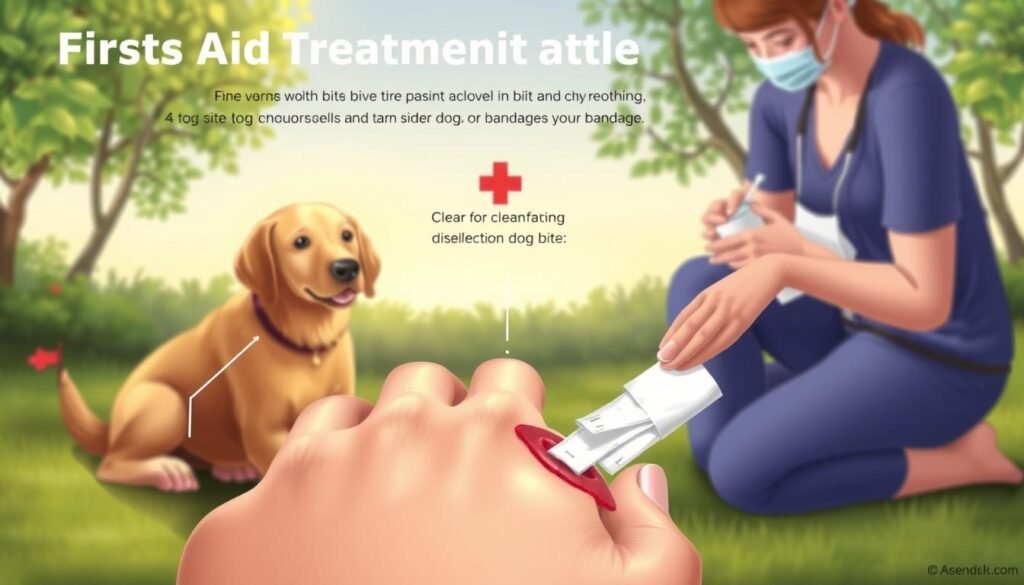
By adhering to these steps and utilizing the correct materials, you can provide effective first aid to your dog post-bite. This helps prevent infection and promotes healing.
When to Seek Immediate Veterinary Care
If your dog is bitten by another dog, knowing when to seek immediate veterinary care can be lifesaving. Dog bites can lead to serious complications if not treated promptly and properly.
Warning Signs of Serious Injury
Certain signs indicate that your dog needs immediate veterinary attention. These include:
- Excessive bleeding that doesn’t stop after applying pressure for a few minutes.
- Deep wounds or those that expose underlying tissues.
- Signs of infection, such as redness, swelling, or a foul odor.
- Changes in behavior, like lethargy or loss of appetite.
Critical Bite Locations Requiring Professional Care
Some bites are more prone to complications due to their location. These include bites on the:
- Head or neck, as they can affect vital structures.
- Joints, which can lead to mobility issues if not properly treated.
- Paws, specially if the bite is deep or becomes infected.
After-Hours Emergency Options
If your dog is bitten outside regular veterinary hours, it’s vital to know your options for emergency care. Many areas have dedicated emergency veterinary clinics that provide 24/7 care.
What to Expect at the Emergency Vet
At an emergency vet visit, you can expect a thorough examination of your dog’s wound. This may include X-rays or other diagnostic tests to assess the extent of the injury.
Information to Provide About the Incident
When seeking emergency veterinary care, it’s helpful to provide as much information as possible about the incident. This includes:
- The status of the other dog’s vaccinations.
- The circumstances of the bite, such as whether it was provoked.
- Any initial treatment you’ve already administered.
Being prepared and knowing when to seek help can significantly impact your dog’s recovery from a dog bite.
Home Care for Minor Dog Bites
When your dog gets a minor bite from another dog, it’s vital to care for it at home. This prevents infection and helps the wound heal. Minor bites can be painful and may lead to complications if not treated right.
Creating a Safe Recovery Space
Creating a safe and comfy space is key for your dog’s recovery. Find a quiet spot where your dog can rest without interruptions. Make sure the area is clean and free from anything that could harm the healing process.

Monitoring the Wound for Changes
It’s important to watch the wound closely for signs of healing or infection. Look for redness, swelling, or discharge. Catching any issues early is critical.
Bandage Changing and Cleaning Schedule
Keeping up with a bandage changing and cleaning routine is essential. Use a mild antiseptic to clean the wound and apply a new bandage. The frequency of these steps depends on the wound’s condition.
Signs the Wound Is Healing Properly
A healing wound will show signs like less redness and swelling, and granulation tissue. Watching for these signs helps you know if your care is working.
Managing Your Dog’s Activity Level During Recovery
It’s important to manage your dog’s activity during recovery. Avoid strenuous activities that could worsen the wound. Instead, encourage gentle movements that help healing without straining the area too much.
Preventing and Treating Infections
Preventing infection is a top priority when dealing with dog bites. Infections can lead to serious complications if not addressed promptly and properly.
Signs of Infection to Watch For
Monitoring the wound for signs of infection is critical. Look for redness, swelling, increased pain, and discharge. If you notice these symptoms, seek veterinary care immediately.
Early detection is key to preventing the infection from becoming severe. Keep a close eye on the wound’s condition and be prepared to act quickly if you observe any adverse changes.
Antibiotics and When They’re Necessary
Antibiotics may be prescribed by a veterinarian to treat bacterial infections resulting from dog bites. It’s vital to follow the veterinarian’s instructions for administering antibiotics to ensure the infection is fully cleared.
- Complete the full course of antibiotics as directed.
- Monitor your dog’s response to the treatment.
- Report any side effects or concerns to your veterinarian.
Natural Antimicrobial Options for Minor Wounds
For minor wounds, certain natural antimicrobial options can aid in preventing infection. These include:
Veterinary-Approved Home Remedies
Applying a diluted solution of honey or aloe vera may help soothe the wound and promote healing. But, it’s essential to consult with a veterinarian before attempting any home remedies.
While natural remedies can be beneficial, they are not a substitute for professional veterinary care. If the wound shows signs of infection or fails to improve, seek immediate veterinary attention.
In conclusion, preventing and treating infections requires vigilance and prompt action. By understanding the signs of infection and knowing when to seek medical care, you can help ensure your dog recovers fully from a dog bite.
Long-Term Care and Psychological Effects
Dog bites can have lasting effects on a dog’s physical and mental health. Long-term care and psychological support are key to recovery.
Supporting Physical Healing Beyond Initial Treatment
After the initial wound treatment, ongoing support for physical healing is vital. This includes watching for signs of infection and keeping the environment clean and safe.
Regular vet visits are essential to check the wound’s healing progress and address any issues promptly.
Recognizing Trauma and Anxiety After a Bite
Dog bites can be traumatic, affecting both physical and mental health. Dogs may develop anxiety or fear, leading to behavioral changes or avoidance.
Rebuilding Confidence Around Other Dogs
Rebuilding confidence around other dogs is critical for dogs bitten by another. This involves gradual exposure to other dogs in a controlled setting.
Working with a Professional Trainer
A professional dog trainer can guide you in safely reintroducing your dog to others. They help build confidence and reduce anxiety.
Gradual Reintroduction Techniques
Gradual reintroduction starts with small steps, like visual exposure from a distance. Then, increase interaction under close supervision.
By addressing both physical and psychological recovery, your dog can heal fully and regain confidence.
Conclusion
Effective dog bite care requires immediate first aid and ongoing treatment. It’s vital to act quickly and correctly to avoid infections and aid in healing.
Key Considerations for Dog Bite Care
| Care Aspect | Description | Importance |
|---|---|---|
| Immediate First Aid | Cleaning the wound and controlling bleeding | High |
| Wound Assessment | Evaluating the depth and location of the bite | High |
| Follow-up Care | Monitoring for signs of infection and promoting healing | High |
Understanding the need for prompt and proper care is key for dog owners. They must be aware of the risks and know when to seek vet help.
In conclusion, treating a dog bite needs careful attention and a commitment to quality care. By following the advice in this article, owners can help their pets heal and reduce the risk of complications.
Sources
For further information on treating dog bites, the following resources are available:
The American Veterinary Medical Association (AVMA) provides guidelines on dog bite prevention and treatment. Visit their website at avma.org for more information.
The Centers for Disease Control and Prevention (CDC) also offer resources on animal bites, including dog bites. Their website is cdc.gov.
Lastly, the American Animal Hospital Association (AAHA) provides pet owners with information on finding a veterinarian and caring for their pets after a dog bite. More information can be found at aaha.org.
These resources provide valuable information for pet owners seeking to understand and care for dog bites.