
There are over 340 known dog breeds around the world. The American Kennel Club has recognized 200 of these. This shows just how diverse the world of dogs is.
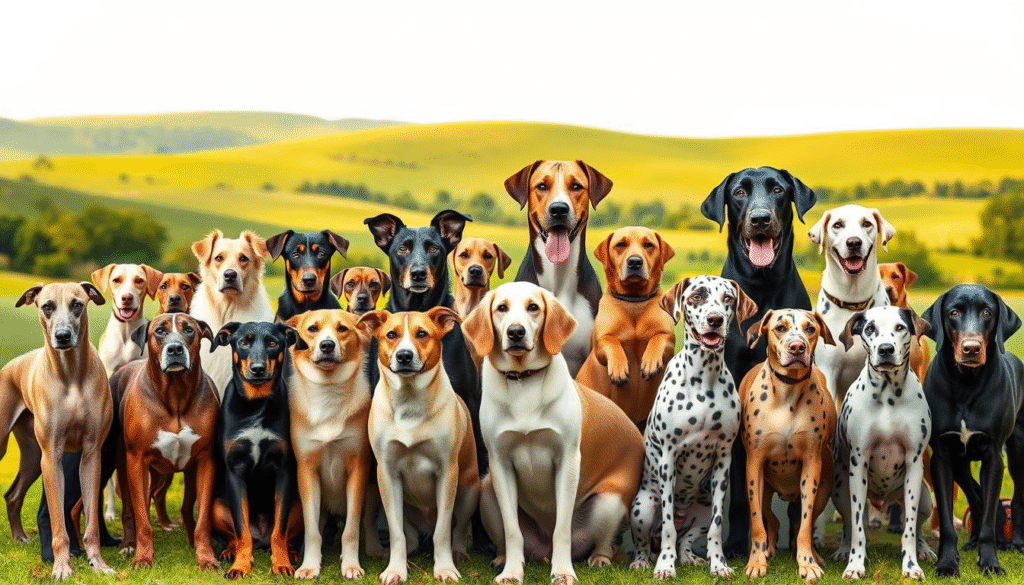
It’s important to know about the different breeds and their traits. This is true if you’re thinking of getting a dog or just want to learn more about them.
The variety in dog breeds means there’s something for everyone. You might want a loyal friend, an active playmate, or a calm protector.
Key Takeaways
- The canine world comprises over 340 recognized dog breeds.
- The American Kennel Club acknowledges 200 of these breeds.
- Understanding breed characteristics is essential for selecting the right dog.
- Different breeds offer unique traits, from loyalty to energy levels.
- Choosing the right breed depends on your lifestyle and preferences.
Understanding the Canine Family
Dogs have a long history, starting from wild wolves. Humans domesticated them thousands of years ago. They were bred for tasks like hunting, guarding, and herding.
Evolution and Domestication of Dogs
Domestication of dogs happened between 15,000 to 30,000 years ago. Scientists debate the exact time. Studies show dogs were domesticated in Europe and Asia. This led to changes in their behavior and body.
“The change from wolves to dogs is amazing,” says a leading researcher. Humans and dogs benefited from their bond. They got protection, companionship, and help with hunting and herding.
Taxonomy of the Dog Family
Dogs are classified as Canis lupus familiaris, a subspecies of the gray wolf. They belong to the Canidae family. Despite their differences, they are considered one species.
Dogs come in many shapes and sizes. They are classified in different ways. This shows how adaptable and versatile dogs are.
The Complete List of Dog Family Breeds
There are hundreds of dog breeds, and knowing which is a purebred canine is key. The world of pet dogs is split into groups based on their looks and history.
Classification Systems for Dog Breeds
Dog breeds are sorted by their purpose, looks, and genes. They fall into categories like herding, hunting, or being a pet.
American Kennel Club Recognition
The American Kennel Club (AKC) is a big name in dog breed recognition. They group breeds into seven categories: Sporting, Hound, Working, Terrier, Toy, Non-Sporting, and Herding.
| AKC Group | Breed Examples |
| Sporting | Labrador Retriever, Golden Retriever |
| Hound | Bloodhound, Beagle |
| Working | German Shepherd, Doberman Pinscher |
International Breed Standards
Worldwide, the Fédération Cynologique Internationale (FCI) sets breed standards. With 90 member countries, they group breeds into ten categories.
Emerging and Rare Breeds
New and rare breeds are becoming more popular. They have special traits and are recognized by smaller groups. The Azawakh and Norwegian Lundehund are examples.
It’s important to know about breed classifications and standards. Whether you’re a breeder or a new pet dog owner, it helps you appreciate these purebred canines.
Working Dog Breeds Review
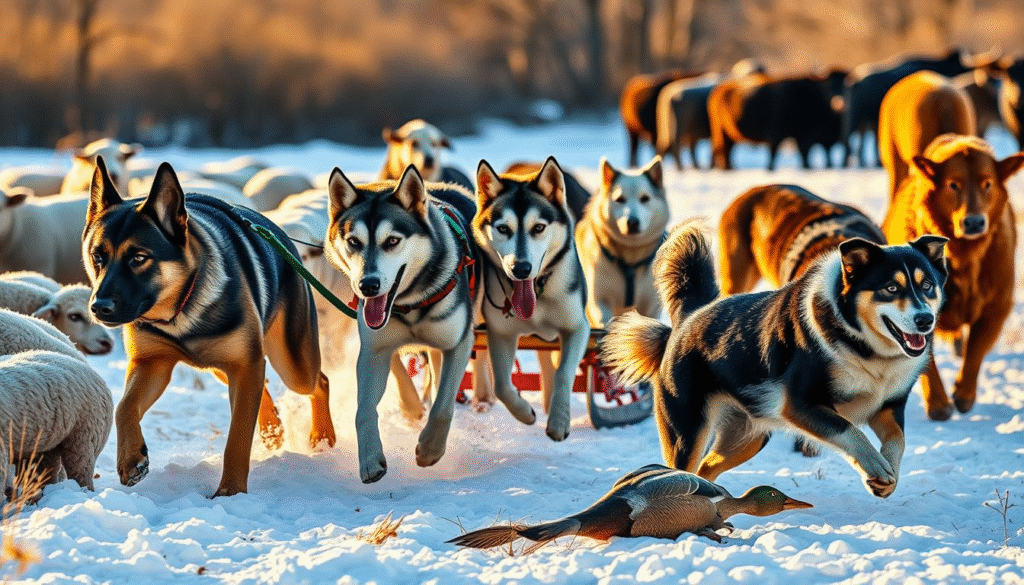
Working dog breeds have a wide range of tasks. They include herding, protection, and assistance. These dogs show how versatile and important they are to us.
Herding Dogs
Herding dogs are smart, agile, and love to herd. Border Collies and Australian Shepherds are top at managing livestock.
Overview: Border Collies and Australian Shepherds
Border Collies are known for their focus and energy. Australian Shepherds are great at herding and being family pets.
Pros and Cons of Herding Breeds
Herding breeds are smart and easy to train. But, they need lots of exercise and mental play, which can be hard for some owners.
Ideal Owners for Herding Dogs
People who love high-energy dogs are best for herding breeds. Farmers and active families are perfect.
Guard and Protection Dogs
Guard dogs protect their families and homes. Rottweilers and Doberman Pinschers are great at this.
Overview: Rottweilers and Doberman Pinschers
Rottweilers are strong and loyal. Doberman Pinschers are smart and athletic, making them good guards.
Pros and Cons of Protection Breeds
Protection breeds are loyal and protective. But, they can be aggressive if not trained and socialized right.
Ideal Owners for Protection Dogs
Experienced dog owners are best for protection dogs. They need to provide a safe and stable home.
Service and Assistance Dogs
Service dogs help people with disabilities. Labrador Retrievers and Golden Retrievers are often used.
Overview: Labrador Retrievers and Golden Retrievers
Labrador Retrievers are friendly and make great service dogs. Golden Retrievers are smart and loyal.
Pros and Cons of Service Breeds
Service breeds are easy to train and loving. But, they need regular grooming and can have health problems.
Ideal Owners for Service Dogs
People or families needing help are best for service dogs. They must be ready to care for these dogs long-term.
| Breed | Primary Use | Key Characteristics |
| Border Collie | Herding | High intelligence, agility |
| Rottweiler | Guarding | Powerful, confident |
| Labrador Retriever | Service/Assistance | Friendly, highly trainable |
Sporting and Hunting Dog Breeds Review
The world of sporting and hunting dog breeds is full of variety. Many breeds are great at different tasks. They have special traits that make them perfect for hunters and outdoor lovers.
Retrievers and Water Dogs
Retrievers and water dogs are very popular. They are known for their great retrieving skills and love for water.
Overview: Chesapeake Bay and Nova Scotia Duck Tolling Retrievers
The Chesapeake Bay Retriever and the Nova Scotia Duck Tolling Retriever are famous in the Retriever group. The Chesapeake Bay Retriever is strong and great at retrieving. The Nova Scotia Duck Tolling Retriever is agile and fun-loving.
Pros and Cons of Retriever Breeds
Retrievers are friendly, smart, and love to please. They make great family pets. But, they need lots of exercise and mental games to stay happy.
Ideal Owners for Retrievers
Active families or hunters who can give them lots of exercise and training will love Retrievers.
Pointers and Setters
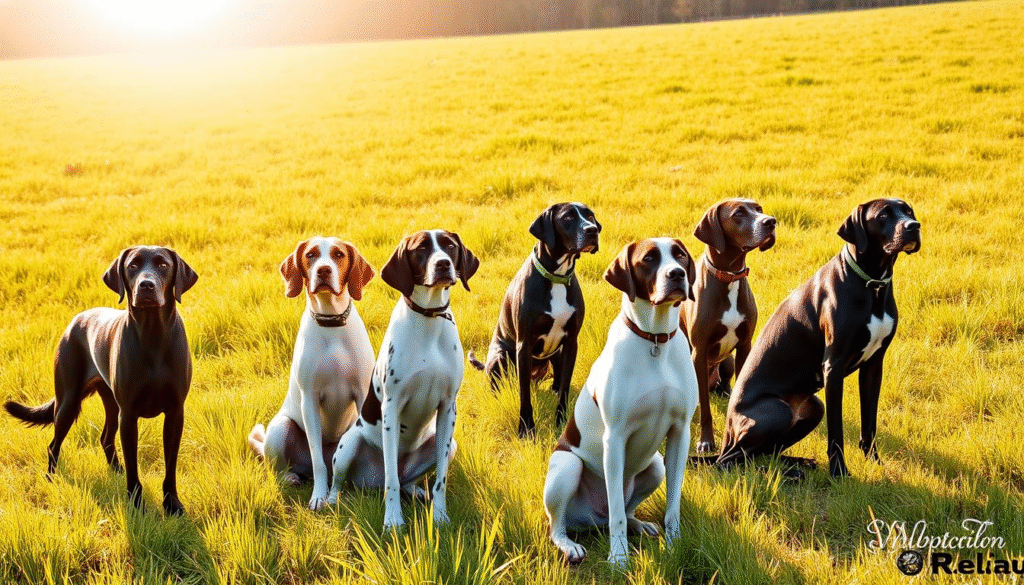
Pointers and Setters are great at hunting. They are known for their pointing and setting skills.
Overview: German Shorthaired Pointers and Vizslas
The German Shorthaired Pointer and the Vizsla are versatile hunting dogs. They are full of energy, smart, and excellent hunters.
Pros and Cons of Pointer Breeds
Pointer breeds are very active and need lots of exercise. They are good with families but need to be socialized early.
Ideal Owners for Pointers
Active hunters or families who love the outdoors will find Pointer breeds great companions.
Spaniels
Spaniels are a diverse group of dogs. They are friendly and great at hunting.
Overview: Cocker Spaniels and Springer Spaniels
Cocker Spaniels and Springer Spaniels are well-known in the Spaniel family. They are loving and good at hunting.
Pros and Cons of Spaniel Breeds
Spaniels are friendly and outgoing. But, they can have health problems if not cared for right.
Ideal Owners for Spaniels
Families or hunters looking for a loyal and loving pet will find Spaniels perfect.
| Breed | Primary Use | Exercise Needs |
| Chesapeake Bay Retriever | Hunting, Retrieving | High |
| German Shorthaired Pointer | Hunting, Pointing | High |
| Cocker Spaniel | Companion, Hunting | Moderate |
Companion and Toy Dog Breeds Review
The world of companion and toy dog breeds is full of variety. They offer traits that fit different lifestyles. These dogs are loved for their affection and ability to adapt, making them perfect for apartment living.

Small Companion Dogs
Small companion dogs are known for their gentle and loving nature. They bond strongly with their owners and are easy to care for.
Overview: Cavalier King Charles Spaniels and Bichon Frises
Cavalier King Charles Spaniels and Bichon Frises are small dogs with friendly and outgoing personalities. They love to be around people and need regular interaction.
Pros and Cons of Small Companion Breeds
Small companion breeds are affectionate and low maintenance. But, they can get anxious when left alone and need consistent training.
Ideal Owners for Small Companions
These breeds need a stable and loving home. They’re perfect for people or families who can spend time with them.
Toy Breeds
Toy breeds are small but have big personalities. They are often lively and full of energy.
Overview: Chihuahuas and Yorkshire Terriers
Chihuahuas and Yorkshire Terriers are bold and confident toy breeds. They are fiercely loyal to their owners.
Pros and Cons of Toy Breeds
Toy breeds are compact and easy to care for. But, they can be fragile and need careful handling.
Ideal Owners for Toy Breeds
Toy breeds need owners who understand their needs. They’re best for people living in apartments or with limited space.
Apartment-Friendly Breeds
Apartment-friendly breeds are great for small spaces with little exercise needed. They are generally quiet and easy-going.
Overview: Shih Tzus and Pugs
Shih Tzus and Pugs are perfect for indoor living. They are friendly, outgoing, and easy to care for.
Pros and Cons of Apartment-Friendly Breeds
Apartment-friendly breeds adapt well to small spaces and need little exercise. But, they can have health issues if not cared for properly.
Ideal Owners for Apartment Dogs
These breeds are ideal for apartment dwellers or those with little outdoor space. They thrive in stable and loving environments.
Terrier Dog Breeds Review
Terrier dog breeds are known for their energy, smarts, and loyalty. They have a feisty nature and come in many sizes and types. This includes everything from working terriers to toy terriers.
Working Terriers
Working terriers are strong, brave, and determined. They are often used for hunting and controlling pests.
Overview: Jack Russell Terriers and Border Terriers
Jack Russell Terriers are full of energy and smart. Border Terriers are loving and tough.
Pros and Cons of Working Terrier Breeds
They are smart and full of energy, making great friends for active people. But, they can be stubborn and need consistent training.
Ideal Owners for Working Terriers
Active people or families who can give them lots of exercise and mental challenges are perfect for working terriers.
Bull-Type Terriers
Bull-Type Terriers, like the American Staffordshire Terrier and Bull Terrier, are strong and loyal.
Overview: American Staffordshire Terriers and Bull Terriers
American Staffordshire Terriers are often misunderstood by the media. Bull Terriers are known for their unique looks and friendly nature.
Pros and Cons of Bull-Type Terrier Breeds
They are loving and loyal but can be aggressive if not socialized right. They need regular training.
Ideal Owners for Bull-Type Terriers
Experienced dog owners who know the importance of socialization and training are best for Bull-Type Terriers.
Small and Toy Terriers
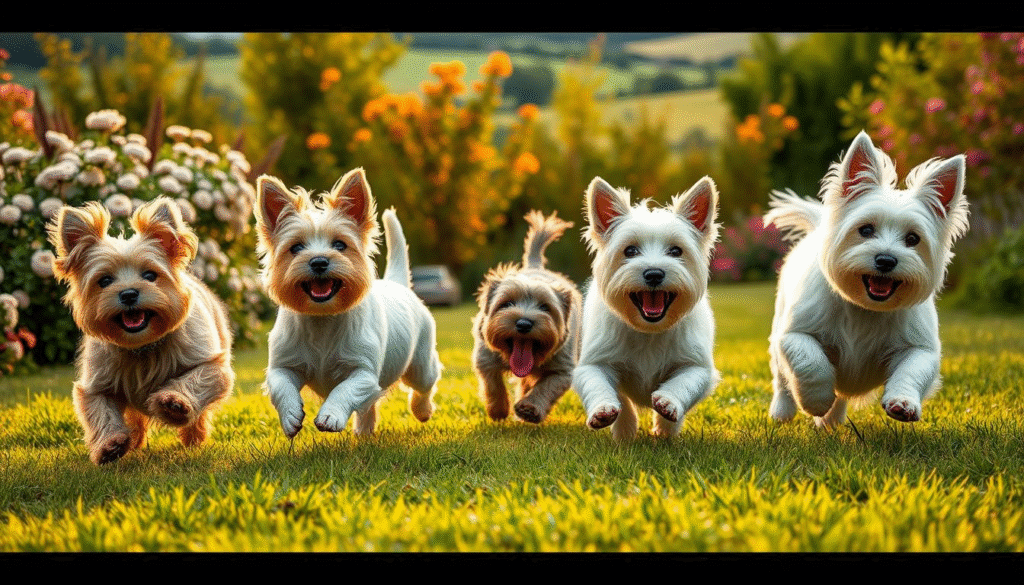
Small and toy terriers, like the West Highland White Terrier and Scottish Terrier, are loved for their small size and lively spirits.
Overview: West Highland White Terriers and Scottish Terriers
West Highland White Terriers are friendly and outgoing. Scottish Terriers are dignified and alert.
Pros and Cons of Small Terrier Breeds
They are loving and adaptable but can be shy around strangers. They also need regular grooming.
Ideal Owners for Small Terriers
Families or individuals with smaller homes who want a loyal friend are perfect for small and toy terriers.
Hound Dog Breeds Review
The world of hound dog breeds is vast and varied. They hunt by scent, sight, and instinct. These breeds are great for hunting and are also loved as pets.
Scent Hounds
Scent hounds are amazing at tracking scents. They are key for hunting and tracking. Their sense of smell is incredible, and they can follow a trail well.
Overview: Bloodhounds and Basset Hounds
Bloodhounds and Basset Hounds are well-known scent hounds. Bloodhounds are great at tracking. Basset Hounds are calm and short.
Pros and Cons of Scent Hound Breeds
Scent hounds are friendly and good with kids. But, they can be stubborn and need consistent training. Their instinct to follow scents can sometimes get them into trouble.
Ideal Owners for Scent Hounds
Scent hounds do best with active families or hunters. They need lots of exercise and mental stimulation.
Sight Hounds
Sight hounds use their speed and sight to hunt. They are slender and can run very fast.
Overview: Greyhounds and Whippets
Greyhounds and Whippets are fast sight hounds. They are known for their speed and love to relax.
Pros and Cons of Sight Hound Breeds
Sight hounds are quiet and laid-back. They are good for apartment living. But, they need regular exercise to stay healthy.
Ideal Owners for Sight Hounds
Sight hounds need a safe, fenced area to run and exercise.
Primitive and Pariah Hounds
Primitive and Pariah hounds are ancient breeds. They have kept many of their original traits. They are often independent and can be hard to train.
Overview: Basenjis and Pharaoh Hounds
Basenjis and Pharaoh Hounds are primitive hound breeds. They have unique traits and hunting abilities.
Pros and Cons of Primitive Hound Breeds
These breeds are smart and energetic. But, they can be aloof and need experienced owners.
Ideal Owners for Primitive Hounds
Primitive hounds need experienced owners. They require structure and consistent training.
| Breed Type | Hunting Style | Ideal Owner |
| Scent Hounds | Tracking by scent | Active families or hunters |
| Sight Hounds | Hunting by sight and speed | Owners with secure, fenced areas |
| Primitive Hounds | Varied, often independent | Experienced dog owners |
“Hounds have been man’s best friend for centuries, serving not just as companions but as invaluable hunting partners.”
— Dog Breeding Expert
Choosing the Right Dog Breed for Your Lifestyle
It’s important to know your living situation and what you like before picking a dog breed. There are many breeds, each with its own traits and needs. Think about a few key things before you decide.
Assessing Your Living Situation
Where you live affects the best dog breed for you. For example, a high-energy dog might not fit well in a small apartment. But, a big yard is perfect for a dog that loves to run.
Activity Level Considerations
How active you are also matters when picking a dog breed. If you love being outdoors, choose a breed that’s energetic too. But, if you’re not as active, a lower-energy dog might be better.
Matching your activity level with a dog’s needs helps both of you enjoy life together.
| Activity Level | Suitable Dog Breeds |
| High | Border Collie, Australian Shepherd |
| Medium | Cocker Spaniel, Beagle |
| Low | Bulldog, Pug |
Family Compatibility Factors
If you have a family, think about how a dog breed will fit in. Some breeds are great with kids, while others are better without them. Also, if someone has allergies, look for hypoallergenic breeds.
Knowing your family’s needs helps find a dog that fits right in. This way, you’ll get a loyal friend that matches your dog ancestry and dog lineage.
Conclusion
The many types of dogs mean you must pick the right one for you. There’s a breed for everyone, from working dogs to pets for companionship.
Different breeds have unique traits like size, temperament, and energy. These traits help decide if a dog fits your home and life.
“The right dog can bring joy and companionship into your life, but it’s vital to choose a breed that fits your lifestyle.”
Think about your home, how active you are, and your family when picking a breed. This ensures a good match for everyone.
| Breed Type | Suitable For |
| Working Dogs | Active owners who need assistance or companionship |
| Companion Dogs | Families or individuals seeking affectionate pets |
In conclusion, knowing about the different types of dogs and their needs is key. It leads to a happy and healthy bond between dog and owner.
Sources
For more on dog breeds and their history, check out these resources:
- American Kennel Club: A top source for dog breed info, including care and training tips.
- Fédération Cynologique Internationale: An international group that sets breed standards and shares dog breed info worldwide.
- The Kennel Club: Based in the UK, it focuses on dog welfare and offers breed info and genealogy insights.
These sources are great for anyone wanting to dive deeper into dog breeds and their ancestry. They cover all aspects of dog genealogy.
FAQ
What is the dog family, and how is it classified?
The dog family, or Canidae, includes dogs, wolves, foxes, and more. Dogs are sorted into breeds based on their looks, history, and purpose.
What is the role of the American Kennel Club in dog breed classification?
The American Kennel Club (AKC) helps recognize and sort dog breeds. They focus on keeping breed quality high and promoting good breeding.
What are some popular working dog breeds, and what are their characteristics?
Working dog breeds include herding dogs like Border Collies and German Shepherds. Guard dogs like Doberman Pinschers and service dogs like Labradors are also popular. These dogs are smart, active, and loyal.
What are the differences between sporting and hunting dog breeds?
Sporting dogs, like Retrievers and Spaniels, are great at retrieving game and doing dog sports. Hunting dogs, such as Pointers and Setters, are built for hunting and finding game.
What are some factors to consider when choosing a dog breed for apartment living?
Think about a dog’s energy, noise, and grooming needs for apartment living. Breeds like the Cavalier King Charles Spaniel and Shih Tzu are good because they’re calm and loving.
How do I choose the right dog breed for my lifestyle?
Consider your home, activity level, and family when picking a breed. Look into different breeds and their needs to find the best fit for you.
What is the significance of dog ancestry and lineage in understanding dog breeds?
Knowing a breed’s history helps understand its traits, temperament, and health. Researching a breed’s background is key to choosing the right dog.
What are some rare and emerging dog breeds?
Rare breeds include the Azawakh, a West African sighthound, and the Swedish Vallhund, a small herder. These breeds are becoming more popular for their unique qualities.